
- Introduction
- Understanding Modern Pet Care: The Landscape in 2025
- The Case for AI-Powered Pet Care
- The Case for Traditional Pet Care
- The Hybrid Approach: Combining AI and Traditional Care
- Practical Decision-Making Guide
- Latest Trends Shaping Pet Care in 2025
- Common Concerns Addressed
- Frequently Asked Questions
- Conclusion:
Introduction
Imagine I am engrossed in my work and suddenly my phone rings, but it was not a call from a friend but a warning from your beloved dog’s smart collar, which was telling about his uncontrollable heartbeat and his increasing stress level.
For a moment it seemed like a science fiction, but immediately I took action and within a few minutes I called my veterinarian and told him all this, he saw the warning given by AI and confirmed it. And this was a hidden problem that we never caught until the dog became seriously ill. Imagine a technology that saved my beloved dog’s life before I even knew he had a problem.
This is no longer just a future thing, it’s actually happening right now. Artificial intelligence is completely transforming pet care. Now we can not only treat a problem when it arises, but also prevent it before it occurs and find a solution.
But as new data-related tools advance, a big question will arise: should AI replace our veterinary doctors, or will they both work together to ensure our pets receive better care. In today’s changing environment, it’s crucial for every pet owner to understand the difference between AI-related care and traditional care. Just estimate from these figures that pet owners in the US will spend $147 billion on their pets in 2023, compared to approximately $90 billion in 2018.
This huge surge in spending, finances, and technology has put us pet owners in a very important position. Our decisions will directly impact the health and happiness of our pets. By comparing AI vs. traditional care, we can better understand how each approach and aspect contributes to the care of our beloved dogs.
In this guide, we’ll compare AI vs. traditional care methods, provide evidence-based information, and share real-world examples. And you’ll see how you can bring the two together for smart, accurate care.
Understanding Modern Pet Care: The Landscape in 2025
What Is Traditional Pet Care?
Traditional pet care represents the established approach to animal wellness that has evolved over decades. This method centers on:
- Regular veterinary visits for preventive health examinations
- In-person physical examinations by licensed veterinarians
- Hands-on diagnostics including palpation, visual inspection, and manual testing
- Direct observation of animal behavior and symptoms
- Personal relationships between pet owners, pets, and veterinary professionals
- Clinical laboratory testing at veterinary facilities
- Experiential knowledge accumulated through years of practice
Consider these statistics: According to the AVMA (American Veterinary Medical Association) in 2016, 82.8% of dog owners visited their vet at least once or twice. At that time, the estimated cost of pet care reached $27.8 billion. This shows that we do take care of our pets, but more than 90% of us visit the doctor at some point, which is a good thing.
However, the challenge we face is that only about 40% of people visit the vet for preventive care every year. This means that we rush to the emergency but often postpone or ignore the check-ups that could have prevented the problem before it arises, which shows that we still need to strengthen our commitment to our pet and its care.
What Is AI-Powered Pet Care?
AI-powered pet care is a new and revolutionary approach to healthcare. It uses artificial intelligence, machine learning, and internet-connected devices to monitor, predict, and manage your pet’s health.
- Smart wearable devices (collars, tags, harnesses) that track vital signs
- Health monitoring systems collecting real-time data on activity, heart rate, and respiratory patterns
- AI-powered diagnostic tools analyzing images of eyes, skin, teeth, and joints
- Automated feeding systems with portion control and scheduling
- Behavioral analysis software detecting changes in mood and stress levels
- Telemedicine platforms connecting pet owners with veterinarians remotely
- Predictive analytics identifying potential health issues before symptoms appear
If you still think AI is a small thing in pet care, take a look at these statistics, which reveal a significant shift. Globally, the AI pet care market reached $4.2 billion in 2024 and is projected to grow steadily in 2025. It is expected to reach $15.34 billion in 2025. This means the AI market is growing at an impressive rate of 12.5% per year.
Just like globally, the same story is true in the US. The value of AI in the US pet market was $514.8 million in 2024 and will increase to $2518.84 million by 2033.
Why Does This Matter?
There’s a huge shift happening among pet owners these days. But here’s another important point: In 2016, approximately 27% of pet-owning families didn’t even visit a veterinarian, often due to reasons like cost, lack of convenience, or simply believing that a visit isn’t necessary.
And that’s where AI-powered solutions are a game-changer. These solutions promise to address all of these shortcomings and complement traditional veterinary care. Meaning, this isn’t just new technology; it’s a bridge that ensures better, more accessible, and more consistent healthcare for our pets.
The Case for AI-Powered Pet Care
What Are the Key Benefits?
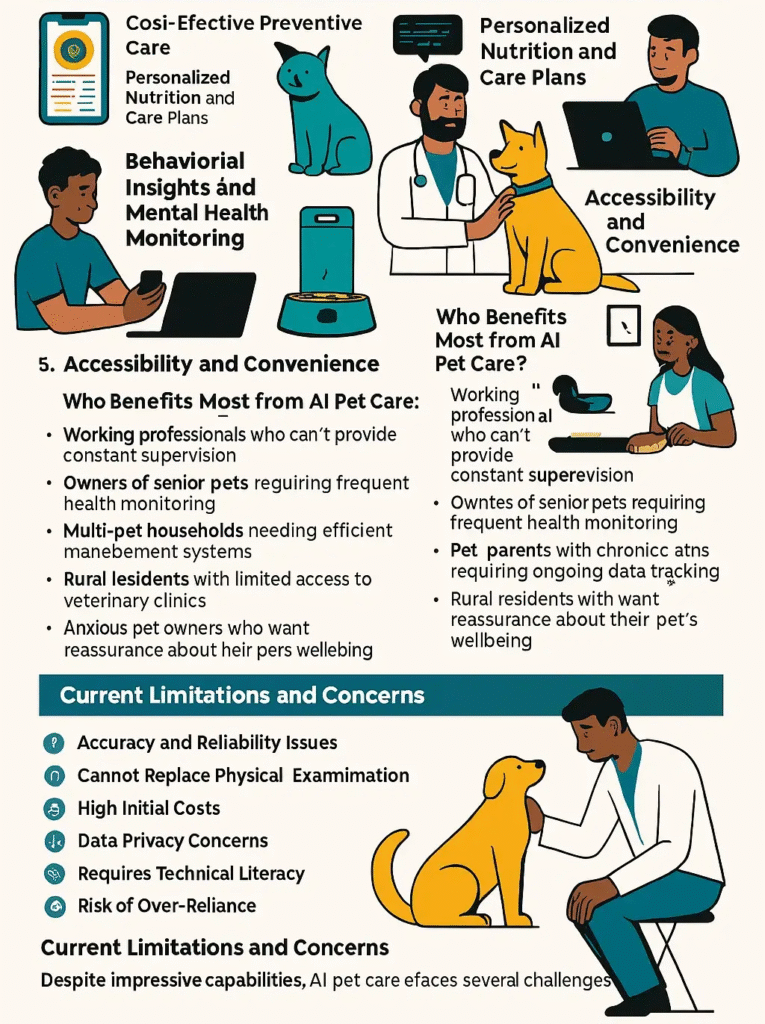
1. 24/7 Health Monitoring and Early Detection
AI-powered wearables continuously track your pet’s vital signs, creating a personalized health baseline. These systems can detect problems days or even weeks before common symptoms appear when any major changes occur. This means we can get to the vet immediately before a problem arises so that timely treatment can be provided.
Real-world example: PetPace smart collars have been monitoring pets since 2016, specifically designed to catch diseases earlier than traditional veterinary visits. Most users are owners of older dogs or those with existing medical conditions who need continuous monitoring.
2. Cost-Effective Preventive Care
While AI devices require initial investment, they can reduce long-term veterinary costs by:
- Preventing emergency visits through early intervention
- Reducing diagnostic time during veterinary appointments
- Identifying behavioral issues before they require intensive training
- Optimizing nutrition and feeding to prevent obesity-related diseases
Dog owners spend an average of $250 per year on regular vet visits, and an average of $472 per surgical visit for dogs. Early detection with AI monitoring can help avoid or reduce these high-cost treatments.
3. Behavioral Insights and Mental Health Monitoring
AI-powered cameras and behavior analyzers track changes in pet behavior patterns that might indicate:
- Separation anxiety
- Depression or loneliness
- Cognitive decline in senior pets
- Pain or discomfort not visible to owners
Tractive launched an advanced dog GPS and health tracker at CES 2025, introducing bark monitoring to detect behaviors like separation anxiety. Resting heart and respiratory rate alerts are also included for early detection of health problems, allowing you to keep your pet under 24/7 surveillance.
4. Personalized Nutrition and Care Plans
AI algorithms meticulously analyze all pet body data to create a customized care routine. Companies like Petplate provide completely fresh food based on your pet’s health profile and even deliver it to your home. And that’s not all! Smart feeders have also emerged that automatically adjust portions based on your pet’s activity level and weight management goals.
Ollie, a fresh dog food subscription company, has excelled in this area. In October 2024, they introduced their ‘Foodback Loop.’ This is a unique, data-driven process that utilizes millions of real-time data points. Its main objective is to improve its products and create feeding algorithms that can accurately meet the needs of every dog and keep it healthy.
To put it briefly, AI is no longer just monitoring health, but it has reached directly to the food plate of our pets, so that they can live the best life and remain happy.
5. Accessibility and Convenience
For pet owners in rural areas, those with mobility challenges, or individuals with demanding schedules, AI tools provide:
- Remote health monitoring without clinic visits
- Virtual consultations reducing travel time
- Instant access to health data and trends
- Automated routine care (feeding, water, medication reminders)
Nearly 40% of pet owners express interest in non-traditional veterinary services like telemedicine, yet only 8% have attended a telehealth appointment, suggesting significant room for growth. There is considerable potential for growth in this area.
Who Benefits Most from AI Pet Care?
AI-powered solutions particularly benefit for :
- Working professionals who can’t provide constant supervision
- Owners of senior pets requiring frequent health monitoring
- Multi-pet households needing efficient management systems
- Pet parents with chronic conditions requiring ongoing data tracking
- Rural residents with limited access to veterinary clinics
- Anxious pet owners who want reassurance about their pet’s wellbeing
Current Limitations and Concerns
To be honest, despite having great capabilities, AI pet care faces several challenges:
Accuracy and Reliability Issues
AI systems can misinterpret data, especially for underrepresented breeds or unusual cases. False alertIt’s true that AI systems sometimes misinterpret data, especially when it comes to species they don’t have much information about. If AI issues a false alert, we could become unnecessarily worried, and if it doesn’t issue a necessary alert at all, treatment could be delayed in serious cases. This is why AI can have issues with accuracy.
Cannot Replace Physical Examination
AI cannot perform palpation, detect subtle physical abnormalities, or conduct hands-on assessments that veterinarians rely on for accurate diagnosis.
High Initial Costs
Quality AI pet care devices typically cost $100-$300 initially, plus potential subscription fees of $10-$30 monthly. This creates accessibility challenges for lower-income pet owners.
Data Privacy Concerns
Connected devices collect extensive data about pets and households, raising questions about data security, ownership, and potential misuse.
Risk of Over-Reliance
Pet owners might delay veterinary visits, trusting AI assessments over professional examination, potentially leading to misdiagnosis or delayed treatment.
The Case for Traditional Pet Care
What Makes Traditional Veterinary Care Irreplaceable?
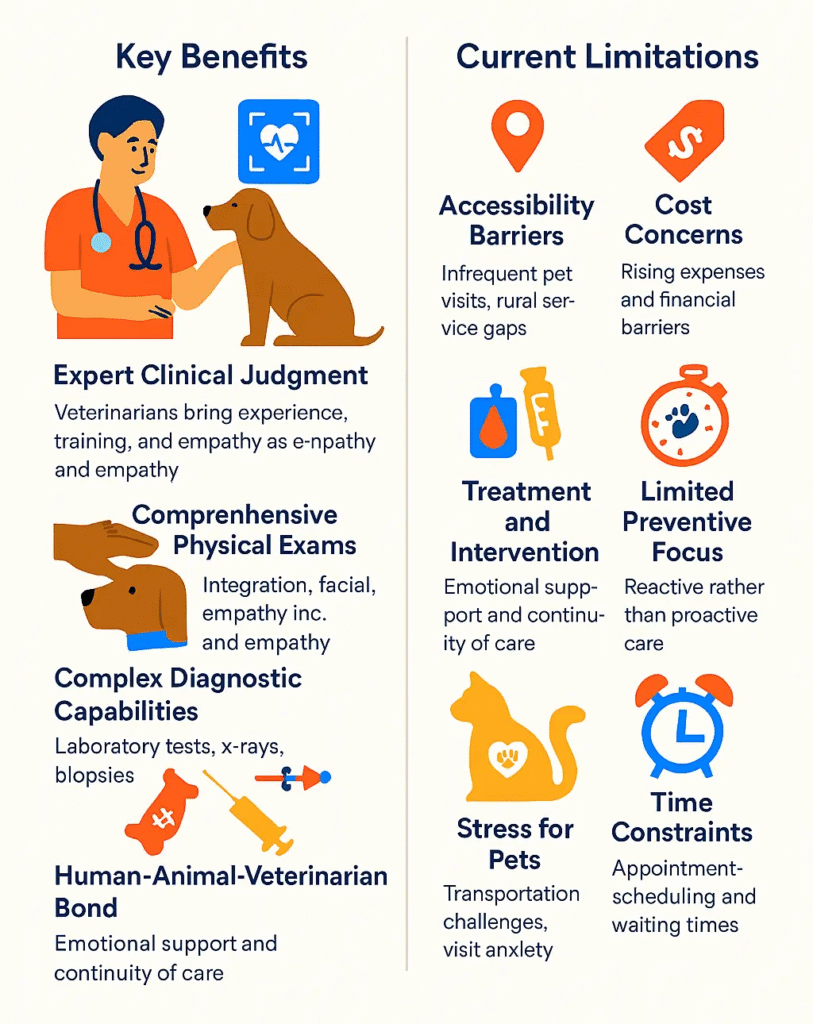
1. Expert Clinical Judgment
Veterinarians work with years of education, training, and experience, which AI technology cannot copy. They can:
- Integrate multiple subtle findings into accurate diagnoses
- Adapt to unusual or complex cases
- Apply contextual knowledge about local health threats
- Make nuanced decisions based on individual animal circumstances
- Provide empathetic, personalized care recommendations
2. Comprehensive Physical Examinations
Traditional veterinary visits include critical assessments AI cannot perform:
- Palpation to detect lumps, organ enlargement, or pain responses
- Auscultation listening to heart and lung sounds
- Dental examinations checking for gum disease, tooth decay, and oral cancer
- Gait analysis identifying orthopedic issues
- Neurological testing assessing reflexes and nerve function
3. Complex Diagnostic Capabilities
Traditional veterinary medicine offers sophisticated testing AI tools cannot provide:
- Blood chemistry panels
- Urinalysis and fecal examinations
- X-rays, ultrasounds, and advanced imaging
- Biopsies and cytology
- Specialized testing for genetic conditions
5. Human-Animal-Veterinarian Bond
The relationship between pet owners and their veterinarians creates trust, continuity of care, and emotional support during difficult health decisions. This personal connection helps with:
- Compliance with treatment plans
- Understanding complex medical information
- End-of-life care decisions
- Managing pet owner anxiety and grief
Research shows 85% of dog owners and 76% of cat owners consider their pet a family member. This emotional bond makes the compassionate, personal approach of traditional care deeply valuable.
Who Benefits Most from Traditional Pet Care?
Traditional veterinary care remains essential for:
- Emergency situations requiring immediate intervention
- Complex medical conditions needing specialist expertise
- Senior pets with multiple health issues
- Diagnostic workups for unidentified health problems
- Surgical procedures and advanced treatments
- Preventive care including vaccinations and parasite control
Current Limitations of Traditional Care
Traditional pet care also faces significant challenges:
Accessibility Barriers
- Only 40% of pet owners maintain annual veterinary visits
- 27% of pet-owning households made no veterinary visits in 2016
- Rural areas often lack convenient veterinary services
- Wait times for appointments can delay care
Cost Concerns
- Veterinary care costs increased 60% from April 2014 to 2024
- Dog owners pay an average of $138 per visit for routine care
- Many pet owners cite cost as a primary barrier to veterinary visits
- Over 30% of pet owners avoid vet visits due to expense
Limited Preventive Focus
Traditional care is primarily reactive, addressing problems after they develop rather than preventing them through continuous monitoring.
Stress for Pets
Many pets experience significant anxiety during veterinary visits, particularly cats, which can make transportation and examination difficult.
Time Constraints
Veterinary visits require scheduling, transportation, waiting room time, and often follow-up appointments, which busy pet owners struggle to accommodate.
The Hybrid Approach: Combining AI and Traditional Care
Why Integration Is the Optimal Solution
The most effective pet care strategies combine the preventative capabilities of AI technology with traditional veterinary medicine’s diagnostic expertise and treatment options. If AI and traditional veterinary medicine work together, they can make a huge difference to the world.
How This Works in Practice:
- Daily Monitoring: AI wearables track vital signs and behavior continuously
- Early Detection: Smart systems alert owners to potential issues
- Professional Assessment: Veterinarians evaluate flagged concerns
- Informed Diagnosis: Vets use AI data alongside physical examination
- Treatment Planning: Traditional medicine provides intervention
- Ongoing Management: AI monitors treatment effectiveness
Implementation Recommendations
For Pet Owners:
- Start with Foundation: Establish relationship with a primary care veterinarian
- Add Smart Monitoring: Invest in quality AI wearables appropriate for your pet
- Maintain Regular Visits: Continue annual preventive care appointments
- Share Data: Provide AI-generated health reports to your veterinarian
- Use Telemedicine Wisely: Virtual consultations for minor concerns, in-person for serious issues
- Trust Professional Judgment: Let AI inform, but not replace, veterinary expertise
For Veterinary Professionals:
- Embrace Technology: Integrate AI tools into practice workflows
- Educate Clients: Explain benefits and limitations of AI systems
- Review Wearable Data: Incorporate continuous monitoring data into assessments
- Offer Telemedicine: Provide virtual follow-ups for appropriate cases
- Set Clear Boundaries: Define when in-person visits are necessary
Practical Decision-Making Guide
When to Prioritize AI Solutions
- Continuous health monitoring of pets with chronic conditions
- Behaviour tracking for anxiety, aggression, or training purposes
- Convenience features like automated feeding and medication reminders
- Initial health screening before deciding if veterinary care is needed
- Supplemental monitoring between veterinary appointments
- Remote peace of mind when away from home
When Traditional Care Is Non-Negotiable
Immediately seek traditional veterinary care for:
- Emergency situations: Trauma, bleeding, difficulty breathing, seizures
- Sudden behavioral changes: Lethargy, loss of appetite, aggression
- Visible injuries or pain: Limping, whimpering, sensitivity to touch
- Gastrointestinal issues: Vomiting, diarrhea, constipation lasting more than 24 hours
- Annual wellness examinations and vaccinations
- Dental cleanings and oral health care
- Prescription medications and controlled treatments
- Surgical procedures of any kind
- Diagnostic testing for concerning symptoms
Cost-Benefit Analysis
| Pet Care Approach | Initial Investment | Annual Cost | Best For |
| Traditional Only | $0-$50 | $250-$800+ | Healthy young pets, preventive care |
| AI Basic | $100-$200 | $120-$360 | Health tracking, behavioral insights |
| AI Premium | $200-$400 | $360-$720 | Senior pets, chronic conditions |
| Hybrid Approach | $200-$400 | $480-$1,200 | Optimal comprehensive care |
Note: Costs vary by pet species, size, and health status. Emergency care costs not included.
Latest Trends Shaping Pet Care in 2025
Emerging Technologies
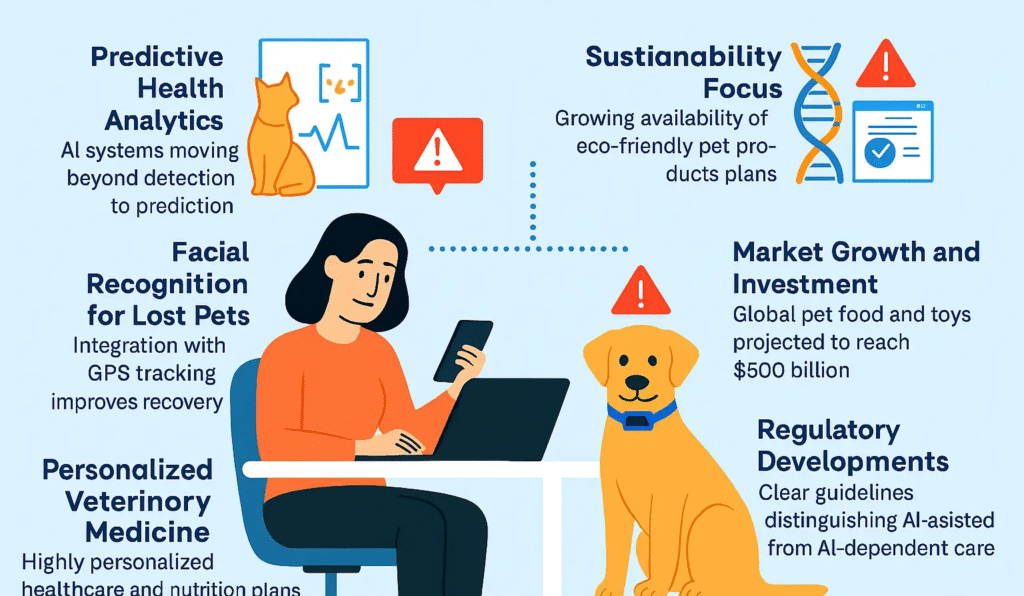
1. Predictive Health Analytics
AI systems are moving beyond detection to prediction, using historical data patterns to forecast potential health issues weeks or months before clinical symptoms appear.
2. Facial Recognition for Lost Pets
Integration of facial recognition technology with GPS tracking significantly improves recovery rates for lost pets, providing real-time location data and instant identification.
3. Sustainability Focus
Growing availability of eco-friendly pet products including biodegradable waste bags, sustainably sourced food, and environmentally conscious toys reflects increasing consumer demand for sustainable pet care solutions.
4. Personalized Veterinary Medicine
Companies are developing AI algorithms that analyze pet genomics, lifestyle, and environmental factors to create highly personalized healthcare and nutrition plans.
Market Growth and Investment
The global pet food and toys market is projected to reach $500 billion by 2030, with the U.S. representing 40% of this market. Growth is driven by premiumization and proactive health management focus.
Online purchasing now accounts for 39% of total pet care sales, reflecting Millennial and Gen Z preferences for e-commerce and subscription-based services offering automatic deliveries based on personalized pet needs.
Common Concerns Addressed
Will AI Replace Veterinarians?
No. AI serves as a powerful tool to augment veterinary capabilities, not replace them. The combination of AI’s continuous monitoring with veterinarians’ diagnostic expertise and treatment capabilities creates superior outcomes compared to either approach alone.
Is AI Pet Care Safe?
When used appropriately, yes. Quality AI pet care devices from reputable manufacturers undergo testing and validation. However, safety depends on:
- Using products from established, vetted companies
- Following manufacturer guidelines
- Not replacing necessary veterinary care with AI monitoring alone
- Understanding device limitations and accuracy rates
Can AI Diagnose My Pet?
Not independently. While AI tools can analyze symptoms and suggest possible conditions, they cannot provide official diagnoses. In most states, remote veterinarians can only offer advice and triage without an established veterinarian-client-patient relationship through an in-person visit.
However, several states are changing laws to allow veterinarians to establish this relationship online or by phone, expanding telemedicine offerings.
Ready to learn more?
- The Future of Pet Healthcare: How AI Gadgets Are Changing Vet Visits
- Top 10 AI Pet Health Gadgets Every Pet Parent in the USA Should Know
Frequently Asked Questions
Conclusion:
In reality, the debate between AI and traditional pet care isn’t about choosing one over the other, but rather about recognizing how these approaches complement each other to create never-before-seen opportunities for pet wellness. These methods can make it even easier to minimize pet problems and keep them healthy.
Traditional veterinary medicine provides:
- Irreplaceable diagnostic expertise
- Hands-on physical examination
- Complex treatments and procedures
- Compassionate professional relationships
- Emergency intervention capabilities
AI-powered pet care offers:
- Continuous 24/7 health monitoring
- Early disease detection
- Personalized nutrition and care
- Behavioral insights
- Enhanced accessibility and convenience
For pet owners, this means investing in high-quality AI tools and maintaining good relationships with veterinarians. It means using data to inform decisions without replacing clinical judgment. It means embracing convenience without compromising quality of care. Keep your beloved pet healthy without ignoring all these things.